My Favorites
The Merchants Who Put Kamouraska on the Map
Writing
Brïte Pauchet, happy to live in Kamouraska, where she can combine many of her passions and share them.
Did you know that the village of Kamouraska wasn’t originally located where it is today? It was founded 2 km further east, at the site known as Le Berceau, for cradle. The sanctuary park, along Route 132, preserves the memory of the old village.
The buildings are gone, but the cemetery remains. A stone outline marks the site of the first church and the rectory. A memorial chapel honors the 1,300 pioneers of the seigneury. The park covers only a portion of the village; the rest lies beneath the fields.
While the priest and the seigneur remained at Le Berceau, the villagers quickly came to prefer the current site, facing the Kamouraska archipelago. Thus, in 1791, when it became necessary to rebuild the church, it was decided to build it there.
Kamouraska became the economic, religious, and administrative heart of the region. It was also a tourist hub, where Quebec City’s elite would come by schooner to enjoy the waters. The village prospered so much that it had 6,000 inhabitants by 1827.
From Clerk to Merchant
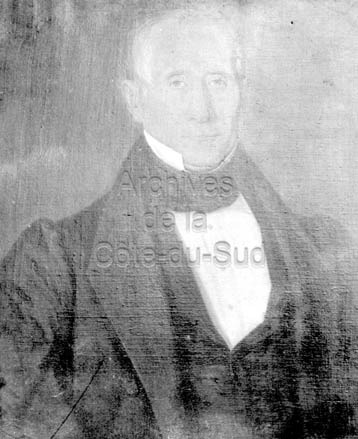
One of the driving forces behind this boom was the merchant Amable Dionne. A native of Kamouraska, he worked as a clerk before becoming the business partner of the merchant Pierre Casgrain, seigneur of Rivière-Ouelle. After some time, he opened a branch in Kamouraska, in his own home.
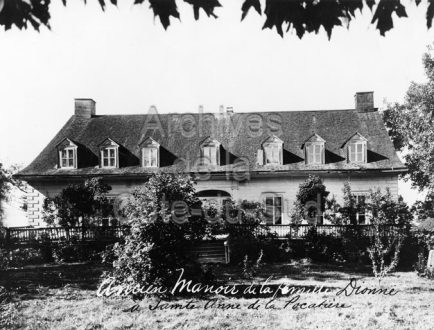
His business was doing well. Very well, in fact. Amable Dionne owned 6 schooners, which transported wheat, Kamouraska butter, and other goods to Quebec City and beyond. Already seigneur of Sainte-Anne-de-la-Pocatière, he purchased the seigneury of Saint-Roch-des-Aulnaies. A visionary, he renovated the flour mill to improve its efficiency and added a sawmill as well as a mill for carding wool and fulling cloth.
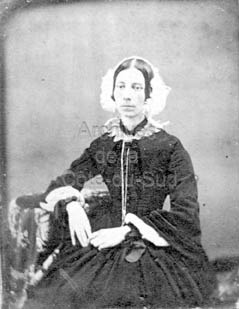
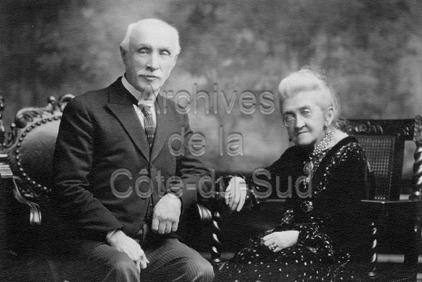
Amable Dionne and his wife, Catherine Perreault, were prosperous and wanted the best for their children.
The sons each inherited a seigneury. The daughters, meanwhile, received a quality education from the Ursulines of Quebec and were given a substantial dowry, which would allow them to choose their husbands.
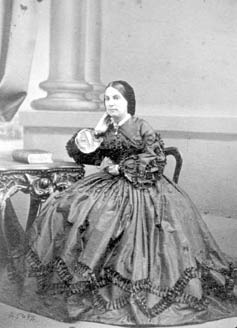
The Dionne sisters were, in fact, highly sought after in Lower Canada’s high society. At today’s rates, each brought her future husband over $300,000.
Merchant and Father of the Confederation
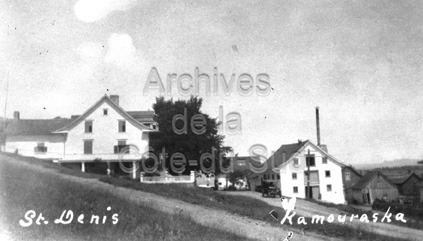
Thus, the youngest daughter, Georgina, married a man named Jean-Charles Chapais at the age of 16. Chapais was already well established at the time. He had built his general store on land in Saint-Denis, which was not yet a village at the time. The general store—which soon became a post office—served as a gathering place where people shared news.
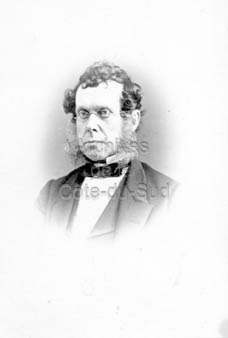
Deeply involved in his community, Jean-Charles Chapais campaigned for the creation of a parish in Saint-Denis and the construction of a church. Encouraged by friends, he entered politics and, after a close race, became the Member of Parliament for Kamouraska in 1851.
In the Legislative Assembly of the United Province of Canada, Chapais proposed reforms to agricultural laws and worked toward the abolition of the seigneurial system. In 1864, he participated in the Quebec Conference as Commissioner of Public Works for the Province of Canada.
He is recognized as one of the Fathers of Canadian Confederation for his role in negotiating greater powers for provincial governments within the future federal system.
Does this story interest you?
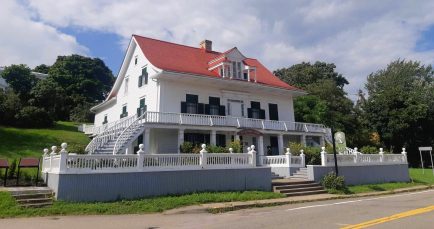
You can visit the sites where these historical figures lived, including the Maison Chapais in Saint-Denis-De La Bouteillerie, as well as the manor house and mill of the Seigneurie des Aulnaies in Saint-Roch-des-Aulnaies. There, you’ll learn more about the local and broader history of Kamouraska.
The Musée de l’agriculture et de l’alimentation in La Pocatière and the Musée régional de Kamouraska are also must-see destinations for discovering the daily lives of our ancestors. And don’t miss the guided tour of the village of Kamouraska, where you can explore Amable Dionne’s house and step back in time to a 19th-century resort.
Finally, the Archives de la Côte-du-Sud in La Pocatière preserve period photos and documents. If you’d like to consult them or are searching for traces of your ancestors, this is the place to visit.
References
Deschênes, G. (2011). La carrière politique de Jean-Charles Chapais (1811-1885). Le Javelier, 27(2).
Dubé, C. (2011). Jean-Charles Chapais : L’homme derrière le politicien. Le Javelier, 27(2).
Fédération des sociétés d’histoire du Québec. (1997). Le moulin banal de Saint-Roch-des-Aulnaies. Histoire Québec, 2(2).
Larocque, P., et coll. (1994). Parcours historiques dans la région touristique du Bas-Saint-Laurent. Université du Québec à Rimouski.
NosOrigines.qc.ca (2026). Nos Origines : généalogie du Québec et d’Amérique française.
Tremblay, S. (1993). Les seigneurs Dionne de Saint-Roch-des-Aulnaies. Cap-aux-diamants, (33).
Archive pictures
Archives de la Côte-du-Sud : shcds.org
Musée québécois de l'agriculture et de l'alimentation
100, 4e Avenue,
La Pocatière,
Québec G0R 1Z0
T. 4188563145
Did you like this article?
You might also be interested in these
@BasSaintLaurent
Include the #BasSaintLaurent hashtag on your posts or tag us when you share your favourite photos and highlights of your trip!